Monthly Archives: February 2018

after Félix Thiollier

A copy of a photograph taken over a century ago by Félix Thiollier, possibly of his daughter, Emma. As far as I can tell from the translation of the French Wikipedia page, he developed his own prints and sometimes altered them using acid, or by drawing over them with ink or gouache.

This was a chance to just experiment with creating light effects using loose brush strokes and rough scraping with a palette knife. The cheap canvas surface was good resistance for the sharp corner of the knife and at times it felt like I was channelling Timothy Spall.

The original photograph has an unreal beauty and it’s hard to know how to add to it with paint. In being documentary, photography sometimes has the trump card over painting in that this moment actually happened. There’s a power to that which no amount of paint handling can recreate.
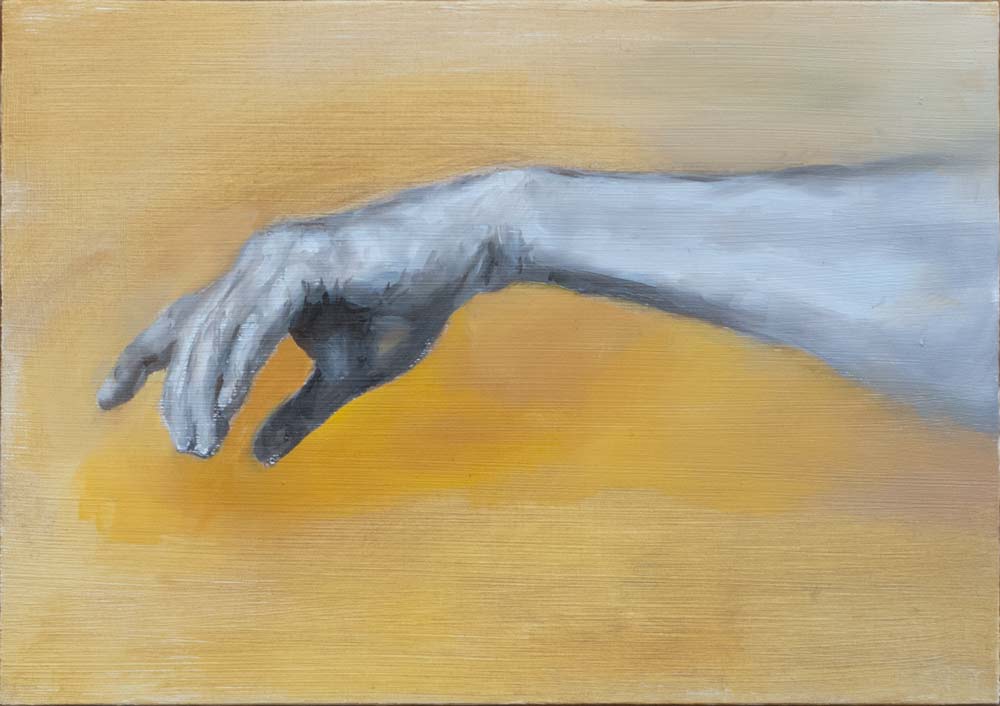
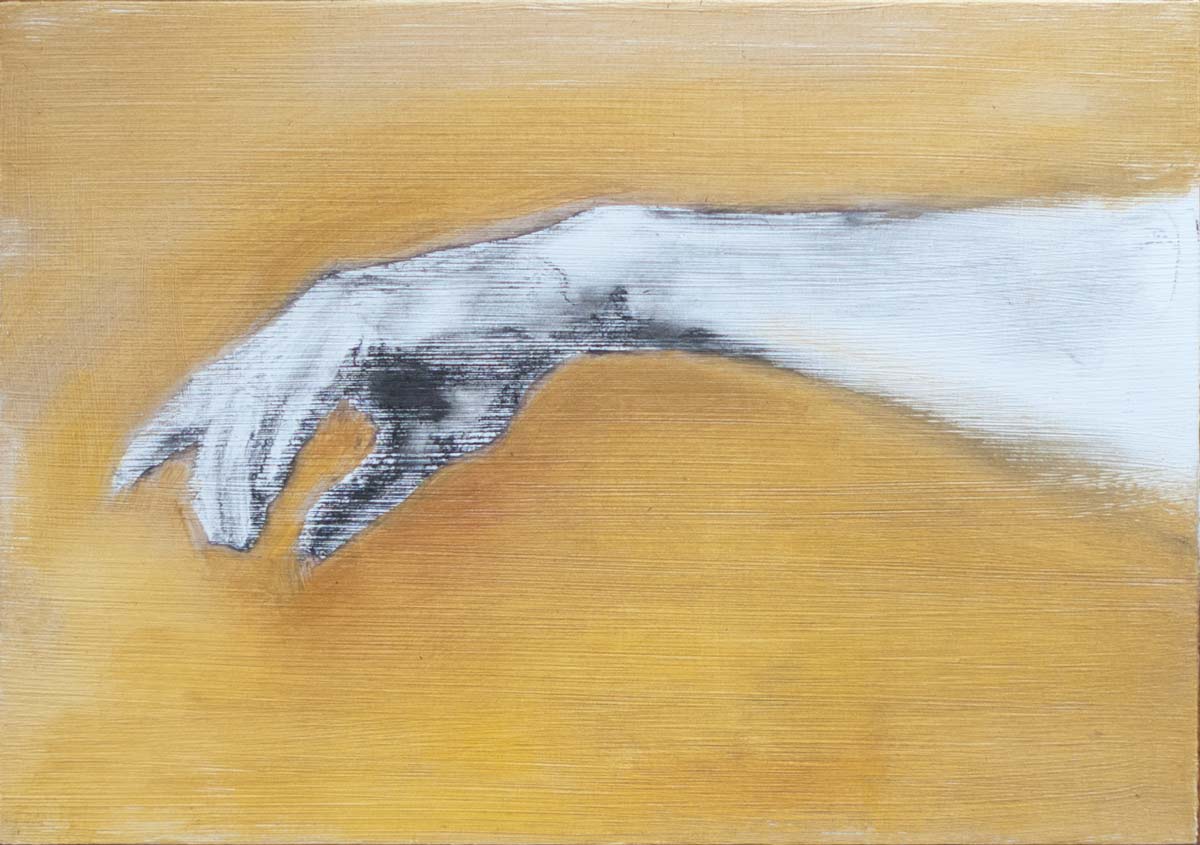
 

oil on charcoal

More experiments with aluminium composite panels, this time on the smaller A5 size. I wanted to see how a vine charcoal pencil would behave on the acrylic gesso surface. Sometimes it’s useful to draw using the precision of a sharp point. And sometimes it’s easier to draw with a pencil grip rather than holding a brush that can only be moved over the surface in certain ways. The question is how to transform that drawing in to a layer of oil paint.

Many people draw directly on canvas then use a spray fixative. Cesar Santos uses this method but has warned against using too much fixative as it creates a weak paint layer.

I found the charcoal draws quite well (albeit with a line tone effect due to the brush strokes in the gesso) and can be lifted off with a kneaded eraser. The paint can be applied directly over the charcoal, but to avoid the whole thing turning into a grey mess it’s necessary to work on only one area of tone at a time and to make sure those values are matched before moving on to the next area.

It’s a bit laborious to do it this way (without the fixative) so I’ll probably stick to using a transfer drawing for any precision areas or to get the overall composition placed correctly. After that, I’ll use a block-in with a brush directly on the canvas, or a wipe-out method for a more tonal drawing. But drawing in charcoal is so much fun, and this alone will make for a more dynamic picture.